Non-Invasive Ultrasonic Thalamic Stimulation in Disorders of Consciousness after Severe Brain Injury: A First-in-Man Report. (opens in a new tab)
Monti MM, Schnakers C, Korb AS, et al.
Assistant Professor, Cognitive Psychology
Metrics: Semantic Scholar · Updated 8 months ago
AI-generated biography
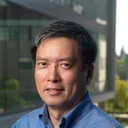
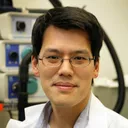
Martin Monti, Ph.D., is a faculty member in the Department of Neurosurgery at UCLA. He earned his Ph.D. in Computational Neuroscience from the University of Cambridge. Dr. Monti's research program is dedicated to understanding the neural dynamics of consciousness and developing novel neuromodulatory interventions for brain disorders. His work extensively utilizes computational neuroscience and advanced neuroimaging techniques, including electrophysiology and cognitive neuroimaging, to investigate the complex interplay of neural activity.
A significant focus of Dr. Monti's contributions lies in the application of non-invasive brain stimulation, particularly transcranial focused ultrasound (tFUS), for precise deep brain modulation. This research aims to advance therapeutic strategies for disorders of consciousness and explore the neural underpinnings of self-awareness and motor control. He has also made substantial contributions to the field of traumatic brain injury research, focusing on predictive modeling and methodological advancements. His work has been supported by major grants, including from the National Institutes of Health, and is characterized by high-impact publications.

Source: Gemini AI · Updated 8 months ago
Martin Monti's research predominantly explores the application of non-invasive neuromodulation, especially transcranial focused ultrasound (tFUS), for precise deep brain stimulation to modulate human brain function. This work aims to develop therapeutic interventions for disorders of consciousness and investigate the neural basis of self-awareness, alongside significant contributions to understanding the long-term impacts and methodological best practices in traumatic brain injury research.
Research topics extracted by AI (Google Gemini) from this member’s publications.
Papers by NIH iCite research category (2 of 54 papers classified) · trials from ClinicalTrials.gov · patents from USPTO.
54 publications · h-index 48 · PubMed, ORCID and the BRI profile
Showing 10 of 54
Monti MM, Schnakers C, Korb AS, et al.
Frohlich J, Toker D, Monti MM.
Monti MM, Parsons LM, Osherson DN.
Toker D, Pappas I, Lendner JD, et al.
Provencio JJ, Hemphill JC, Claassen J, et al.
Monti MM, Lutkenhoff ES, Rubinov M, et al.
Monti MM, Rosenberg M, Finoia P, et al.
Cain JA, Spivak NM, Coetzee JP, et al.
Stern JM, Spivak NM, Becerra SA, et al.
Cain JA, Visagan S, Johnson MA, et al.
$390K total · 1 NIH grant
R21EB034428Contact PI2024–2026
R21EB034428Contact PIFY2024
Institute members who share papers or grants with this researcher
AI-generated
Generated automatically from this profile's public data to suggest possibilities. Treat them as starting points rather than recommendations.
R01 (Research Project Grant)
The R21 mechanism is designed to support exploratory/developmental research and often serves as a precursor to a full-scale R01. Given the researcher's success in developing and comparing MR-supplemented models for TBI recovery prediction, an R01 would be the natural next step. It would allow for robust validation of these promising models in larger, more diverse cohorts, refinement of the multimodal fusion techniques, deeper exploration of underlying neurological mechanisms identified by the models, and pursuit of further clinical translation or broader application. This aligns with the 'development and comparison' aspect of their current grant, moving towards definitive testing and implementation.
U01 (Research Project Cooperative Agreement)
Given the computational and data-intensive nature of multimodal fusion and machine learning for TBI prognostication, a U01 could be highly beneficial. This mechanism is suitable for projects that require a multi-site collaborative approach, standardized data collection across different institutions, or participation in larger NIH consortia (e.g., related to TBI, neuroimaging, or AI/ML in health). It allows for closer interaction with NIH program staff and facilitates the development of shared resources or methodologies that could be critical for validating complex predictive models across diverse populations and clinical settings.
R24 (Resource-Related Research Project - Non-Exploratory/Developmental)
If the developed MR-supplemented models and multimodal fusion techniques prove highly robust and generalizable, the researcher could consider an R24. This mechanism supports the creation, development, and/or maintenance of research resources. For this researcher, an R24 could be used to develop and disseminate their advanced analytical software, standardized data processing pipelines for multimodal TBI data, or curated de-identified datasets as a shared resource for the broader TBI research community. This would leverage their methodological innovations to accelerate research beyond their immediate lab.
Monti's work on consciousness disorders and neuromodulation could be significantly enhanced by Uddin's expertise in developmental brain connectivity and psychopathology biomarkers, particularly in understanding how disruptions in these networks relate to altered states of consciousness.
Project idea: They could investigate how focused ultrasound or other neuromodulation techniques might modulate resting-state functional connectivity and default mode network dynamics in individuals with disorders of consciousness, seeking to identify potential biomarkers for recovery.
Dr. Cramer's broad neuroscience research likely encompasses areas relevant to Dr. Monti's focus on disorders of consciousness and neuromodulation, offering potential for bridging basic and clinical research.
Project idea: They could investigate the neurobiological underpinnings of consciousness recovery in patients using Dr. Monti's neuromodulation techniques, with Dr. Cramer providing expertise on broader neuroscience mechanisms.
Shared papers, topics or department