Identification of neural oscillations and epileptiform changes in human brain organoids. (opens in a new tab)
Samarasinghe RA, Miranda OA, Buth JE, et al.
2021201 citationsRCR 10.7398th percentile

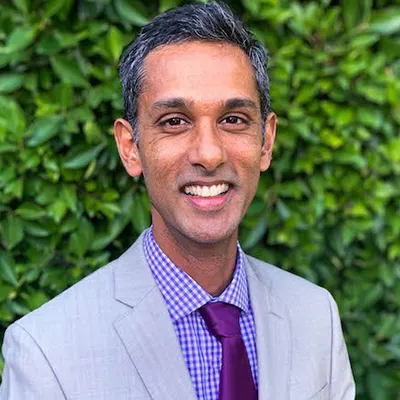
Dr. Ranmal Samarasinghe received his MD and PhD degrees from the University of Pittsburgh in 2013. He completed his residency in adult neurology at UCLA in 2017 and then completed an NIH funded post-doctoral research and clinical fellowship at UCLA from 2017-2020. During this period, Dr. Samarasinghe obtained clinical training in epilepsy and neurophysiologic intraoperative monitoring. He also performed research developing stem cell-based models of epilepsy and autism, which is the foundation of his own laboratory. Dr. Samarasinghe’s laboratory seeks to understand the mechanisms of neural network formation and dysfunction in epilepsy and autism. His efforts are focused on 3D brain-like structures called human brain organoids that are grown in a laboratory dish and that are derived from stem cells. Brain organoids can be generated from the stem cells of individual patients and may provide unique insights into the causes of human neurological diseases such as epilepsy and autism. His laboratory is developing and utilizing multiple methodologies including whole-organoid multiphoton based calcium indicator imaging, voltage sensors, traditional extracellular recordings, high throughput genomic screens, and super-resolution synaptic imaging to interrogate the developmental trajectory of nascent neural networks in organoid models. Dr. Samarasinghe will also continue to manage patients with epilepsy and autism in his clinic and perform neurophysiologic intraoperative monitoring for surgical cases performed at UCLA and affiliated hospitals.
Source: BRI Website (AI extract) · Updated 8 months ago
Ranmal Samarasinghe's research centers on elucidating the mechanisms of neurological disorders, with a specific focus on epilepsy and intellectual disability. Utilizing advanced human brain models like organoids and assembloids, they investigate neural network dysfunction, electrophysiological changes, and altered brain connectivity to understand disease pathology and identify therapeutic targets.
Research topics extracted by AI (Google Gemini) from this member’s publications.
11 publications · h-index 10 · PubMed, ORCID and the BRI profile
Showing 10 of 11
Samarasinghe RA, Miranda OA, Buth JE, et al.
Samarasinghe RA, Di Maio R, Volonte D, et al.
Atamian A, Birtele M, Hosseini N, et al.
Ho Y, Samarasinghe R, Knoch ME, et al.
Samarasinghe RA, Witchell SF, DeFranco DB.
Bales JW, Yan HQ, Ma X, et al.
Allison T, Langerman J, Sabri S, et al.
Samarasinghe RA, Kanuparthi PS, Timothy Greenamyre J, et al.
McCrimmon CM, Toker D, Pahos M, et al.
Samarasinghe RA.
$1.1M total · 1 NIH grant
K08NS119747Contact PI2021–2026
K08NS119747Contact PIFY2021–2025
Institute members who share papers or grants with this researcher




AI-generated
Generated automatically from this profile's public data to suggest possibilities. Treat them as starting points rather than recommendations.
R01 from NINDS
The researcher's significant work on sudden unexpected death in epilepsy (SUDEP) using fMRI and their modeling of cortical/hippocampal network dysfunction in human assembloids directly aligns with NINDS's mission to reduce the burden of neurological disorders like epilepsy.
R01 from NICHD
Their research exploring intellectual disability in the context of epilepsy, particularly through the use of human brain assembloid models to investigate developmental network dysfunction, is highly relevant to NICHD's focus on understanding and preventing intellectual and developmental disabilities.
R01 via NIH BRAIN Initiative (administered by NINDS/NIMH)
The development and application of advanced human brain assembloid models to study network dysfunction in complex neurological conditions like epilepsy and intellectual disability represents a highly innovative approach that aligns with the BRAIN Initiative's goals to develop new tools and technologies for understanding brain function and disease.
 Samantha ButlerNeurobiologyFit 8/10
Their research areas strongly complement each other, with Butler's focus on neural progenitor differentiation and Samarasignhe's work on human brain organoids and neurogenesis in the context of epilepsy and TBI.
Project idea: They could investigate how specific neural progenitor differentiation pathways influenced by external factors (like glucocorticoids or TBI-related signaling) contribute to network dysfunction in human brain organoids modeling epilepsy or TBI.
 Neil HarrisNeurosurgeryFit 8/10
Their research areas strongly complement each other, with Harris's focus on TBI pathogenesis and epilepsy biomarkers directly aligning with Samarasignhe's expertise in epilepsy modeling (brain assembloids, organoids) and TBI-related neural signaling.
Project idea: They could collaborate on a project investigating how specific pathological mechanisms of TBI, identified by Harris, influence network dysfunction and epilepsy development in human brain organoid models developed by Samarasignhe, potentially validating biomarkers.
 Felix SchweizerNeurobiologyFit 7/10
Researcher A's work on epilepsy models, particularly with human brain organoids and assembloids, can be significantly advanced by Researcher B's expertise in neurotransmitter release mechanisms and presynaptic function. Understanding the precise synaptic dysfunctions underlying network abnormalities in A's models is crucial.
Project idea: Investigate the role of specific neurotransmitter release mechanisms and calcium channel function in the synaptic dysfunction observed in Researcher A's human brain assembloid models of epilepsy.
Researcher A's expertise in epilepsy modeling using human brain organoids and stem cell-derived neurons strongly complements Researcher B's focus on autism spectrum disorder genetics, traumatic brain injury mechanisms, and pluripotent stem cell differentiation. Both researchers work with stem cell-derived models and neural systems.
Project idea: They could collaborate to investigate the genetic underpinnings of network dysfunction in induced pluripotent stem cell (iPSC)-derived neuronal models of epilepsy, potentially identifying common pathways or therapeutic targets relevant to both epilepsy and neurodevelopmental disorders like ASD.
Researcher A's focus on brain organoid models of neurological disorders, particularly epilepsy, could be significantly advanced by Researcher B's expertise in epigenetic regulation of gene expression, offering a deeper understanding of the molecular mechanisms underlying these conditions.
Project idea: Investigate the epigenetic underpinnings of aberrant neural network dysfunction observed in Researcher A's human brain organoid models of epilepsy, potentially identifying novel therapeutic targets.
Their research areas are highly complementary, with De La Torre-Ubieta's focus on evolutionary gene regulation and neuronal diversity providing a fundamental framework for Samarasignhe's work on epilepsy models and organoid development.
Project idea: They could collaborate to investigate how evolutionary changes in gene co-expression networks and neuronal diversity in specific brain regions (e.g., cerebellum or hippocampus) contribute to network dysfunction and susceptibility to epilepsy in their human brain assembloid models.
Their research areas complement each other well, with Hoftman's focus on psychiatric disorders and circuit dysfunction and Samarasignhe's expertise in epilepsy models and neural stem cell biology. Combining these could lead to novel insights into the neural underpinnings of developmental and neurological disorders.
Project idea: They could collaborate on developing human brain organoid models to investigate the neurobiological mechanisms linking early-onset epilepsy or developmental trajectories to later psychiatric conditions like schizophrenia or autism.
 Ausaf BariNeurosurgeryFit 7/10
Their research areas complement each other well, with Dr. Bari's broad neuroscience expertise potentially enhancing Dr. Samarasignhe's specific focus on epilepsy and brain organoids.
Project idea: They could collaborate on using Dr. Bari's neurosurgical insights to inform the development and application of Dr. Samarasignhe's human brain organoid models for studying epilepsy pathophysiology.
Researcher B has a highly specialized and multi-faceted research program in epilepsy, neurogenesis, and brain organoid modeling, which could significantly benefit from Researcher A's broader expertise in neuroscience research. Combining their knowledge could lead to novel insights into neurological disorders.
Project idea: They could collaborate on developing and studying human brain organoid models to investigate the neural circuit disruptions underlying sudden unexpected death in epilepsy.
Their research areas are highly complementary, with Colwell's broad neuroscience expertise potentially enhancing Samarasignhe's specific focus on epilepsy models and organoid development, allowing for a deeper understanding of network dysfunction.
Project idea: They could collaborate on developing and characterizing more complex human brain assembloid models of epilepsy, incorporating functional neuroscience techniques to study neural oscillations and network dysfunction in relation to specific genetic or molecular pathways.
 Laura DeNardoPhysiologyFit 7/10
Laura's broad neuroscience research background could benefit from Ranmal's specific expertise in human brain organoids and epilepsy models, while Ranmal could gain from a more general physiological perspective on neural function.
Project idea: They could collaborate on studying the physiological underpinnings of network dysfunction in Ranmal's human brain assembloid models of epilepsy.
While distinct, Poe's focus on sleep-dependent memory and arousal regulation, and Samarasignhe's work on epilepsy, brain organoids, and neural stem cell regulation offer a strong potential for complementary research. Combining their expertise could illuminate how sleep disruptions, common in epilepsy, impact memory consolidation and neuronal health.
Project idea: Investigate how altered sleep patterns and neural network dysfunction in epilepsy models, utilizing Samarasignhe's organoid systems, affect memory consolidation mechanisms studied by Poe.
 Greg FieldOphthalmologyFit 3/10
While both researchers study neural systems and cell function, their specific focus areas (retinal degeneration vs. epilepsy and organoid models) are quite disparate, offering limited direct overlap.
Project idea: A highly indirect collaboration might explore if mechanisms of neuronal death in retinal degeneration have any parallels in epilepsy models or if stem cell-derived neural cells from either lab could be used in the other's experimental systems.
Shared papers, topics or department