Advancing the understanding of autism disease mechanisms through genetics. (opens in a new tab)
de la Torre-Ubieta L, Won H, Stein JL, et al.
2016588 citationsRCR 19.3899th percentile

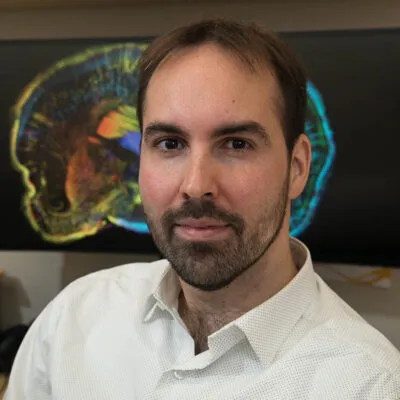
Assistant Professor
AI-generated biography
Luis De La Torre-Ubieta, Ph.D., is a researcher in the Department of Psychiatry & Biobehavioral Sciences at UCLA. His work centers on unraveling the genetic and gene regulatory mechanisms that orchestrate human brain development and the generation of neuronal diversity. Dr. De La Torre-Ubieta employs cutting-edge technologies, including single-cell transcriptomics and cerebral organoid models, to investigate how disruptions in these developmental processes and gene networks contribute to the pathogenesis of psychiatric and neurodevelopmental disorders such as schizophrenia and autism. His research has yielded significant contributions to understanding the dynamic landscape of open chromatin during human cortical neurogenesis and the molecular roles of specific genes in synaptic function and memory. Dr. De La Torre-Ubieta's impactful publications have garnered substantial citations, reflecting the broad influence of his investigations into the genetic underpinnings of complex brain disorders and neuronal evolution.
Source: Gemini AI · Updated 8 months ago
Luis De La Torre-Ubieta's research focuses on elucidating the genetic and gene regulatory mechanisms that govern human brain development and establish neuronal diversity, frequently employing advanced tools such as single-cell transcriptomics and cerebral organoids. A key aspect of this work is investigating how these fundamental developmental processes and gene networks are implicated in the pathogenesis of psychiatric and neurodevelopmental disorders, including schizophrenia and autism.
Research topics extracted by AI (Google Gemini) from this member’s publications.
Papers by NIH iCite research category (1 of 31 papers classified) · trials from ClinicalTrials.gov · patents from USPTO.
31 publications · h-index 33 · PubMed, ORCID and the BRI profile
Showing 10 of 31
de la Torre-Ubieta L, Won H, Stein JL, et al.
Iwase S, Lan F, Bayliss P, et al.
Polioudakis D, de la Torre-Ubieta L, Langerman J, et al.
Watanabe M, Buth JE, Vishlaghi N, et al.
Won H, de la Torre-Ubieta L, Stein JL, et al.
Seidlitz J, Nadig A, Liu S, et al.
de la Torre-Ubieta L, Stein JL, Won H, et al.
Walker RL, Ramaswami G, Hartl C, et al.
Lasorella A, Stegmüller J, Guardavaccaro D, et al.
Stein JL, de la Torre-Ubieta L, Tian Y, et al.
Institute members who share papers or grants with this researcher









AI-generated
Generated automatically from this profile's public data to suggest possibilities. Treat them as starting points rather than recommendations.
R01 from NIMH
Their work on brain gene co-expression networks, complement signaling, and synaptic pathology in schizophrenia (Kim et al. 2021) directly aligns with the NIMH mission to understand the causes and mechanisms of mental disorders, especially through molecular and neurodevelopmental lenses.
R01 from NINDS
The research on TGFβ superfamily signaling, human stem cell pluripotency, and telencephalic organoids (Watanabe et al. 2022), coupled with an interest in the gene regulatory logic of vertebrate neuronal diversity, fits well within NINDS's focus on fundamental neuroscience, neurodevelopment, and neurological disease mechanisms. Organoid models are a key tool for NINDS research.
R01 from NICHD
The strong emphasis on human stem cell pluripotency, telencephalic organoid development, and the evolutionary and developmental logic of neuronal diversity is a direct fit for NICHD's mission to understand human development, including brain development, and the genetic and cellular mechanisms underlying normal and abnormal processes.
 Carlos Portera-CailliauNeurologyFit 8/10
Their research areas are highly complementary: De La Torre-Ubieta's expertise in evolutionary gene regulatory logic of neuronal diversity and gene co-expression networks could provide a foundational understanding of the genetic underpinnings of neural circuits, which Portera-Cailliau investigates in the context of development, plasticity, and disorders like ASD and Fragile X.
Project idea: They could investigate how evolutionary conserved gene regulatory mechanisms influence the development of excitation-inhibition balance and synaptic plasticity in specific neuronal subtypes relevant to autism spectrum disorder.
 Michael WellsHuman GeneticsFit 8/10
Researcher A's focus on evolutionary gene co-expression networks in neuronal diversity strongly complements Researcher B's work on the genetics of neural circuits, particularly in the context of autism spectrum disorder and neurodevelopmental issues. Their combined expertise could provide a unique evolutionary and genetic perspective on the origins of neuronal dysfunction.
Project idea: They could investigate how evolutionary shifts in gene co-expression networks, as studied by Researcher A, have contributed to the emergence of neuronal circuit variations relevant to conditions like autism, using Researcher B's models of human stem cell differentiation and neural circuit development.
Their research areas strongly complement each other, with De La Torre-Ubieta's focus on the evolutionary and regulatory logic of neuronal diversity providing a broad evolutionary context for Zipursky's detailed molecular and circuit-level investigations of neuronal wiring and assembly.
Project idea: They could investigate the evolutionary conservation and divergence of gene regulatory networks controlling neuronal diversity and circuit assembly, particularly within the visual system, linking evolutionary pressures to specific molecular mechanisms and resulting circuit structures.
 Ranmal SamarasingheNeurologyFit 7/10
Their research areas are highly complementary, with De La Torre-Ubieta's focus on evolutionary gene regulation and neuronal diversity providing a fundamental framework for Samarasignhe's work on epilepsy models and organoid development.
Project idea: They could collaborate to investigate how evolutionary changes in gene co-expression networks and neuronal diversity in specific brain regions (e.g., cerebellum or hippocampus) contribute to network dysfunction and susceptibility to epilepsy in their human brain assembloid models.
 Carrie BeardenPsychologyFit 7/10
Carrie Bearden's work on psychotic symptom severity, cannabis exposure, and neurodevelopmental disorders in youth, particularly within Latinx populations, could be significantly enriched by Luis De La Torre-Ubieta's expertise in brain gene co-expression networks and neuronal diversity. His work offers a mechanistic, genetic, and evolutionary lens that could elucidate the underlying biological pathways of psychosis risk and neurodevelopmental differences identified by Bearden.
Project idea: They could collaborate on a study investigating how specific gene co-expression networks related to neuronal diversity in key brain regions are associated with psychotic symptom severity and cannabis exposure risk in Latinx youth, potentially identifying novel biomarkers for early intervention.
 Samantha ButlerNeurobiologyFit 7/10
Samantha's work on progenitor cell differentiation and neural development complements Luis's expertise in gene co-expression networks and neuronal diversity, allowing for a deeper understanding of the regulatory mechanisms underlying neuronal evolution and function.
Project idea: They could jointly investigate the gene regulatory networks controlling specific neuronal subtype differentiation in spinal interneurons, linking developmental processes to evolutionary patterns of neuronal diversity.
 Ahmet AracNeurologyFit 7/10
Ahmet's expertise in motor control and machine learning for neurorehabilitation could inform Luis's work on neuronal diversity and gene networks by providing a system to study how these networks impact functional outcomes in neurological disorders, potentially revealing underlying genetic mechanisms.
Project idea: They could investigate the genetic basis of motor recovery in stroke patients by analyzing gene co-expression networks in relation to kinematic data and machine learning-derived rehabilitation outcomes.
Their research areas are complementary: Askary focuses on single-cell signaling dynamics and genetic recording, while De La Torre-Ubieta investigates brain gene co-expression networks and neuronal diversity. Combining these would allow for a deeper understanding of how cellular signaling dictates neuronal diversity and evolution.
Project idea: They could collaborate on a project to map specific cellular signaling pathways and their dynamic changes to the emergence of distinct neuronal subtypes and their evolutionary trajectories.
 Steven CramerNeurologyFit 6/10
Dr. Cramer's broad neuroscience expertise could be complemented by Dr. De La Torre-Ubieta's focus on gene co-expression networks and neuronal diversity, allowing for a deeper mechanistic understanding of neurological phenomena.
Project idea: They could investigate how specific gene co-expression patterns, identified by De La Torre-Ubieta, contribute to neuronal diversity relevant to conditions studied by Cramer in neurology.
 Laura DeNardoPhysiologyFit 3/10
Researcher A has a highly specific focus on gene co-expression networks and neuronal diversity evolution, while Researcher B's area is broadly defined as neuroscience. There's a potential for complementarity if Researcher B's work aligns with the molecular or evolutionary aspects of neuronal diversity.
Project idea: If Researcher B's neuroscience research involves detailed characterization of neuronal subtypes, they could collaborate on analyzing gene expression patterns within those subtypes to identify evolutionary or regulatory underpinnings.
Shared papers, topics or department